
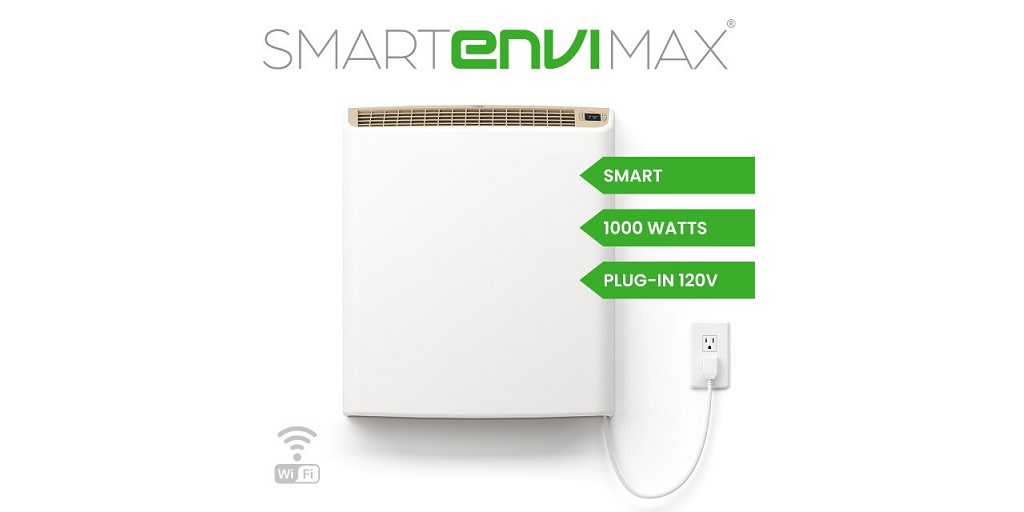
Owning a cabin in the woods comes with a specific list of things to figure out, and heating sits near the top. Most people plug in a space heater or two and call it good. That works, until it doesn’t. The issue isn’t comfort, it’s what wall heaters like the Envi by eHeat actually offer that portable units can never match in a structure built almost entirely from wood.
Table of Contents
Wall Heaters Have No Open Flame
Wood-frame and log cabins have character. They also carry a serious vulnerability: almost everything around you burns. Space heaters sit on floors and surfaces, run hot on the outside, and tip over. The Consumer Product Safety Commission estimates they’re involved in roughly 1,700 residential fires every year in the U.S., and cabins that sit unattended for days at a stretch aren’t exactly lower risk.
Electric wall heaters cut that combustion risk out entirely. No gas lines, no pilot lights, no open flame anywhere in the equation. They mount directly to the wall, up off the floor, with no exposed heating elements on the surface, so there’s nothing radiating heat into a wood floor or baseboard. That matters a lot more in a log structure than it does in a house with drywall and fiberglass insulation.
Wall heaters stay fixed in place. A dog running through the room doesn’t knock one over. Luggage doesn’t tip it on arrival weekend. Panel wall heaters sit flush against the wall and don’t protrude into the room, which matters in cabins where space is already tight. Recessed wall heaters go a step further and install directly into the wall cavity. For the bathroom specifically, a bathroom wall heater handles that cold corner without dragging any portable unit near water.
Wall Heaters in Every Room? That’s Zone Heating, and It Makes Sense
Cabins don’t need to be uniformly warm all the time. Zone heating solutions work well here because cabin rooms have different demands: a bedroom at night runs cooler than you’d think, the main living area gets used most during the day, and the bathroom only needs real heat for about 20 minutes in the morning. Trying to cover all of that with one or two portable units means either overcooking one room or freezing in another.
Each electric wall heater runs independently, so cabin owners can dial in different temperatures per room and not think about it again. Energy-efficient heaters in a zone setup don’t waste output on empty rooms, and that adds up fast over a full winter, especially if the cabin holds at a low setback temp during the week and needs to climb fast before people arrive Friday night.
Wall heaters can also cover the structures outside the main cabin. Garage wall heaters keep a detached workshop or storage space from dropping below freezing without pulling heat from the main building. For anyone already running a wood stove or fireplace as the primary source, supplemental heating from a wall-mounted unit handles the cold corners those heat sources consistently leave behind, usually the far bedrooms and any room off the main living area.
Experience the Envi
Cabin owners put real money and real care into these properties. Heating them carefully isn’t overcaution, it’s just not inviting a problem where one doesn’t need to exist. Wall heaters mounted into wood-frame walls, with no exposed elements and no floor-level operation, take a genuine fire risk off the table without making the space look or feel any different. For a structure that’s essentially combustible by design, that’s a trade worth making.
For cabin owners looking at electric options built for exactly this kind of residential install, Eheat carries a line of wall heaters worth checking out. They’re compact, made for standard walls, and straightforward to run.
For more information about Convection Heater and Plug In Heater Please visit: Eheat, Inc.
