
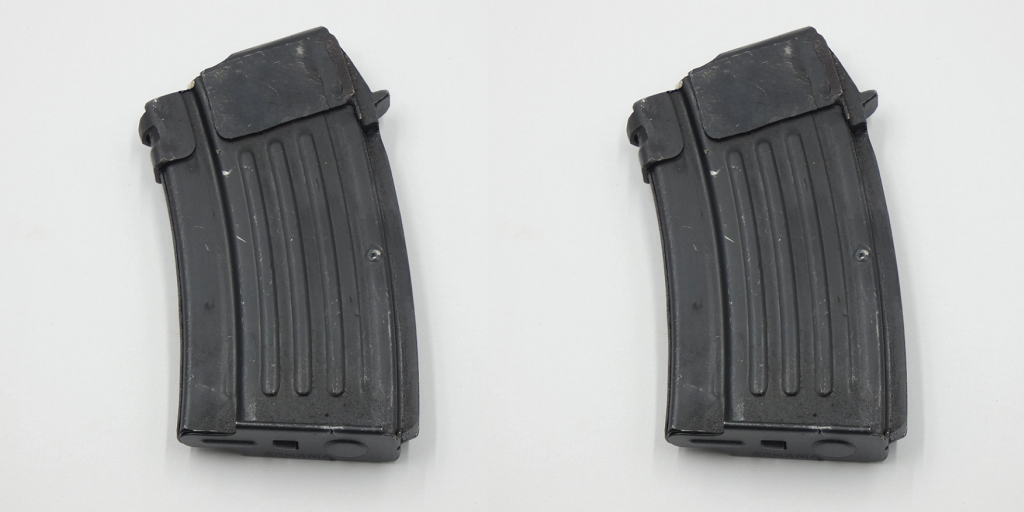
Everyone cleans their rifle after a trip to the range, but not everyone thinks specifically to clean the magazine.
That’s not how it should be. Let this short post turn that around with some pointers for how to keep your rifle magazines in shooting shape for longer
Table of Contents
Cleaning Your Rifle Magazines
Cleaning most detachable box magazines is straightforward enough. As always, observe basic firearm safety before and during firearms cleaning. Open the action, inspect the chamber, and drop the magazine. Inspect the mag to ensure there are no live rounds in it, and you can get to work.
Many detachable box mags have a base plate that can be removed so that the mag spring and follower can be pulled out the bottom. If they don’t, you can usually turn the follower sideways and then pull both out the top.
Set the follower and spring aside and inspect the magazine body and feed lips. Clean the outside with a damp rag in order to remove any fouling or other debris, and clean the inside with a brush or pick as much as access allows. If necessary, you can also use a can of compressed air to blast out the inside of a rifle magazine.
Now turn your attention to the mag spring and follower. Using a nylon or brass brush, clean these to remove any fouling or other loose debris, then you can add a drop of gun oil to the spring as well as to the follower if it is steel (not needed if it is plastic).
The purpose of the oil here is not to lubricate the spring (most rifle magazines should not be lubricated anyway). It is to insulate the spring against corrosion, which is the main killer of mag springs. One drop should do it. Less is more here because oil is sticky and attracts dirt, fouling, dust and other debris.
All in all, that’s most of what there is to a routine cleaning of a rifle magazine. Now you can reassemble the thing in reverse order.
Where to Inspect for Damage?
While you have the magazine cleared and removed from the rifle, now’s as good a time as any to inspect for damage that could be hindering the performance of the mag.
The first thing to do is check the magazine body. There should be no corrosion on the mag tube, and no large dents or indentations that could make it hard to seat or drop the mag, or worse, that could interfere with loading or feeding.
When you have the rifle magazine spring and follower removed, you should inspect these as well. Both should be free of corrosion and any noticeable damage.
Lastly, check the magazine’s feed lips. These are critical to ensure that the cartridges not only stack properly, but they are aligned properly for smooth feeding. If the feed lips are rough, corroded, warped, or otherwise damaged in any way, it is very likely to negatively impact the feeding and performance of the rifle.
Occasionally rough feed lips can be smoothed and if there is minor warping or damage, it can be rectified by bending them back to shape, but if the damage is extensive, often the magazine must be replaced.
Here for New Rifle Magazines?
If you need to replace some rifle magazines that have seen better days, are just here for a new mag spring to make your own repairs, or want some spare mags for the range bag, visit SARCO, Inc. They carry a wide range of rifle magazines (and pistol magazines, for that matter) some of which are offered at surprisingly competitive prices.
For more information about Springfield Parts and Military Surplus Rifles Please visit: Sarco Inc.
