
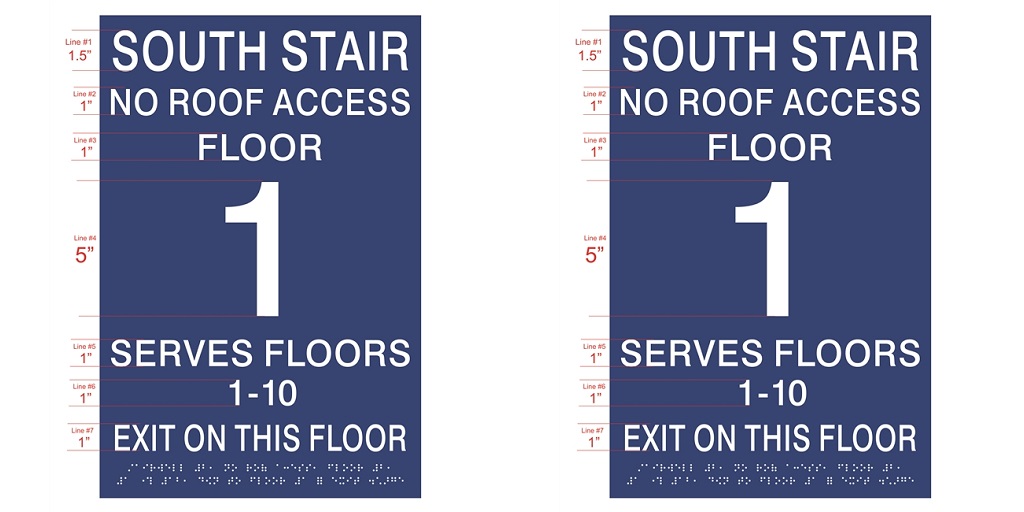
Walk into any multi-story building, and you’ll see stairwell signs placed near doors, inside enclosures, and along exit routes. Their importance shows up in those moments when something feels uncertain and decisions have to be made quickly.
The need for proper stairwell signs grew over time as safety reports, accessibility gaps, and real situations revealed where people struggled to find their way. Building owners, code officials, and safety groups began focusing on how people move during emergencies and made changes based on what actually happens inside a space.
Table of Contents
Stairwell Signs Became Critical When People Needed Direction Fast
Emergencies expose every weak point in a building’s layout. Fires, power outages, and evacuations create stress and confusion. People rely on instinct, and instinct depends on clear visual cues.
That’s where commercial stairwell safety signs come in. They guide people toward exits, identify stair enclosures, and confirm whether a path leads to a safe destination. Without proper egress path signage, occupants can hesitate, turn the wrong way, or lose time trying to figure out where they are.
Fire departments also depend on these systems. Responders use floor-level identification signs in stairwells to quickly track their position. When those markers are missing or inconsistent, coordination slows down. It’s a small detail that carries weight in real situations.
Accessibility Changed the Standard for Stairwell Signs
The introduction of the Americans with Disabilities Act set a clear expectation for accessibility across public and commercial spaces. Navigation had to work for everyone, including individuals with visual impairments.
That requirement led to the rise of ADA compliant stairwell signage, which includes features like raised characters and braille. These additions allow people to identify exits and stairwells without relying on sight alone.
Tactile stairwell signs and braille emergency exit signs now play a direct role in how buildings meet accessibility standards. They’re placed at consistent heights and locations so users can rely on them without guesswork. This level of consistency supports independence and removes barriers that once existed in everyday navigation.
Building Codes Filled in the Gaps
Accessibility laws addressed inclusion, while safety organizations focused on consistency and performance. Groups such as the National Fire Protection Association and the International Code Council developed detailed requirements for building-code stair signs.
These guidelines cover:
- Stairwell identification labels
- Floor numbering inside enclosures
- Roof access and re-entry information
- Placement standards for visibility and reach
The goal is simple. Every building should communicate the same way, no matter where someone is. Familiar layouts help people react faster, especially when they’re in an unfamiliar space.
Real Incidents Pushed Better Stairwell Signage Forward
Large-scale events also influenced how buildings approach signage. Emergency situations revealed how difficult evacuation becomes when people can’t identify exits or move through stairwells quickly under pressure.
Post-incident reviews identified confusion about exits, delays in movement through stairwells, and difficulty identifying safe routes. These findings led to stronger enforcement of existing codes and better awareness among property owners.
While no single event created today’s standards, each one added pressure to improve how buildings communicate during emergencies.
Custom Stairwell Wayfinding Makes a Difference in Real Spaces
Every building works a little differently, from how people move through it to how each space is used, whether it’s a hospital, office tower, or hotel. That’s why custom stairwell wayfinding matters, since it adapts to those differences and helps people find their way without confusion.
Standard rules provide the baseline, but thoughtful design helps people understand their surroundings faster. Clear labeling, consistent placement, and durable materials all contribute to a system that works in real conditions.
Property managers usually treat stairwell signage as part of a larger plan, connecting it to overall wayfinding, ensuring compliance, and making daily navigation easier for everyone.
Stairwell Signs Continue to Evolve With Expectations
Expectations around safety and accessibility keep moving forward. Buildings are expected to support smooth navigation at all times, not just during inspections.
Modern stairwell signs are designed to hold up over time, remain easy to read, and work for different users without extra effort, with details like braille placement and material choice directly affecting their performance. Getting this right early helps businesses and property owners avoid issues later and keeps the space organized, compliant, and ready when it counts.
For those looking to improve their building signage, it helps to work with a provider that understands both compliance and real-world use. You can explore a complete line of ADA compliant custom Braille signs, labels, and stairwell solutions at Braille Sign Pros.
For more information about Braille Elevator Signs and Braille Room Number Signs Please visit: Braille Sign Pros LLC.
