
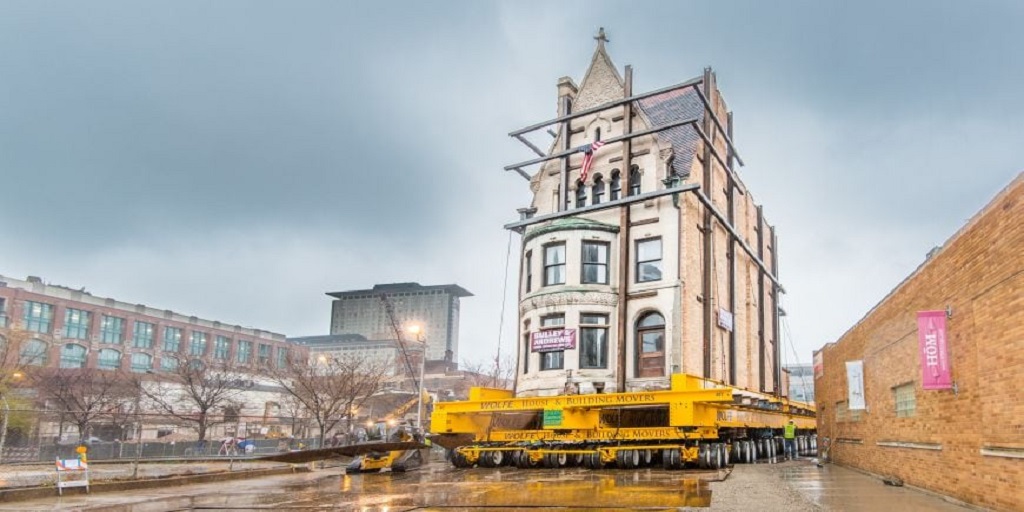
While many people assume that historic preservation means freezing a building in place, the truth is more flexible. House building movers often conduct historic building relocation for such structures, especially when preservation at the original site is no longer realistic. As cities grow, landscapes change, and environmental risks increase, relocating a structure may be the only way to protect it from demolition, neglect, or damage. Rather than losing a piece of history entirely, moving it allows the building to continue existing in a safer and more suitable environment.
Table of Contents
When is Moving a Building the Only Option?
One of the strongest arguments for moving historic buildings is simple: it can save them when no other option will. Urban development often puts pressure on older structures. Expanding roads, new construction, and rising land values can make it difficult to justify keeping a building where it stands. Instead of tearing it down, relocation offers a compromise. It can preserve a building and allow the community to use the land for modern needs. Developers often employ house movers to protect culturally significant homes, churches, and landmarks that would otherwise be lost.
In instances when there are environmental threats such as flooding or erosion, structures can face degradation and decay that can stretch for years. Moving a building to higher ground or a more stable site can protect it for future generations. There are examples of entire churches and homes being relocated just a short distance to avoid repeated damage from nearby rivers. In these cases, relocation is not just practical; it is necessary for the survival of the community.
In some situations, accessibility and visibility alone are enough for a historic relocation. Some historic buildings end up hidden or crowded by newer developments. Relocating them to a more open or appropriate setting makes them more appealing and allows more people to appreciate them. A well-known example is when Wolfe House Movers relocated the home of Alexander Hamilton to a park setting where visitors can experience it more fully. The building did not lose its historical value by moving. In fact, it gained new life as a public landmark.
House Building Movers Use Special Equipment for a Historic Building Relocation
Of course, moving a building is not as simple as lifting and transporting it. Experienced house building movers rely on structural analysis and advanced equipment to ensure the structure remains intact. They first create a support for the building to distribute the weight evenly. The building is then raised using a coordinated system of jacks and supports.
Once raised, heavy-duty dollies are installed under the structure. These dollies are engineered to support tens of tons each and work together to slowly and steadily move the building. Hydraulic systems power both lifting and movement, allowing operators to maintain precise control at every stage.
Powering the entire operation requires powerful machinery. Diesel power units generate the energy needed to drive the dollies. Despite the scale of the task, the process is often surprisingly efficient when handled by skilled professionals like Wolfe House & Building Movers.
Preserving History and Heritage Requires Skill and Technology
House building movers make historic building relocation a viable and often essential preservation strategy. Using their expertise, skill, and knowledge, they help communities choose to protect and adapt their local historic structures. Moving a building ensures that history continues in a place where it can be protected, appreciated, and used for generations to come.
For more information about Roof Lifting and House Lifting Please visit: Wolfe House & Building Movers.
