
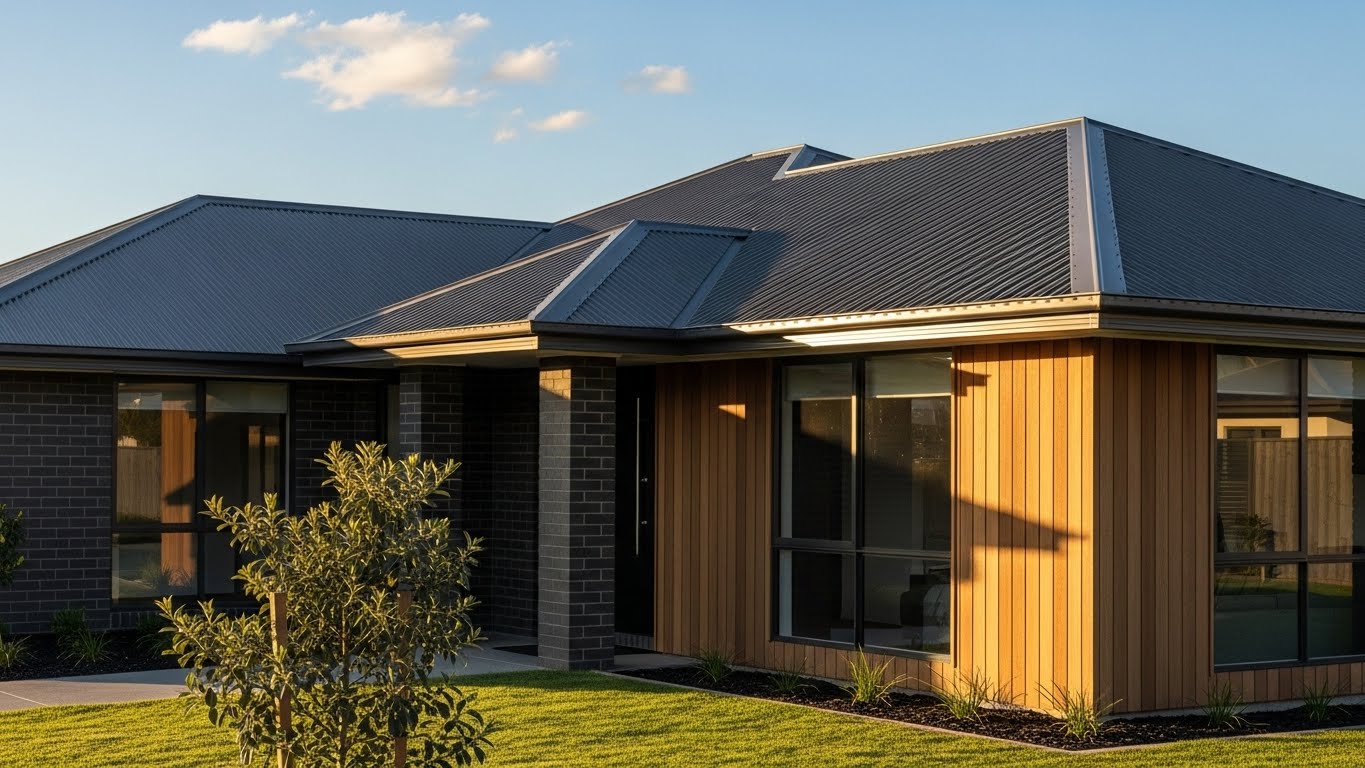
Drive down any street in Australia, from a quiet suburban cul-de-sac to a modern coastal development, and you’ll see it. The clean lines, the distinct profiles, and the palette of colours inspired by the Australian landscape. We’re talking about Colorbond roofing, a material that has become an iconic feature of Australian architecture.
For decades, the choice for a home’s roof was simple: tiles. But in recent years, there has been a significant shift. More and more homeowners are choosing Colorbond roofing when building new or replacing an old, tired roof. This popularity is no accident. It’s a direct result of a material that is specifically designed to handle the unique and often brutal conditions our country throws at it.
If you’re considering a new roof, it’s essential to understand what makes this material such a standout choice. Let’s dive into the world of Colorbond roofing and see if it’s the right fit for your home.
Table of Contents
What is Colorbond Roofing, Really?
First, let’s clear up a common misconception. Colorbond roofing is not just “tin.” It’s a highly advanced, multi-layered product. Think of it like a technological sandwich designed for maximum durability. At its heart is a strong steel base. This is then coated with a metallic layer for corrosion resistance, followed by a special primer to ensure adhesion, and finally, a durable, baked-on topcoat of paint.
This entire process is what sets it apart. The colour is bonded to the metal, meaning it won’t chip, flake, or peel away like a standard paint job would. This sophisticated manufacturing process is what gives Colorbond roofing its renowned strength and longevity.
Why is Colorbond Roofing a Favourite for Australian Homes?
The reason this material has become so popular comes down to one simple fact: it is perfectly suited to the Australian lifestyle and environment. It solves many of the common problems homeowners face with traditional roofing materials.
Built to Beat the Heat
Australian summers can be relentless. A dark, heat-absorbing roof can turn your ceiling cavity into an oven, driving up your air conditioning costs. Most of the colours in the Colorbond roofing range feature special Thermatech® technology. This is designed to reflect more of the sun’s heat on hot, sunny days. By absorbing less heat, your home stays cooler naturally, which can help reduce your energy bills.
Tough Enough for Wild Weather
From tropical downpours in Queensland to severe hailstorms in Victoria, Australian weather is anything but predictable. Colorbond roofing is incredibly resilient. Unlike tiles, which can crack on impact from large hail or become dislodged in high winds, the steel sheets are securely fastened and can withstand significant force. This durability provides homeowners with peace of mind during storm season.
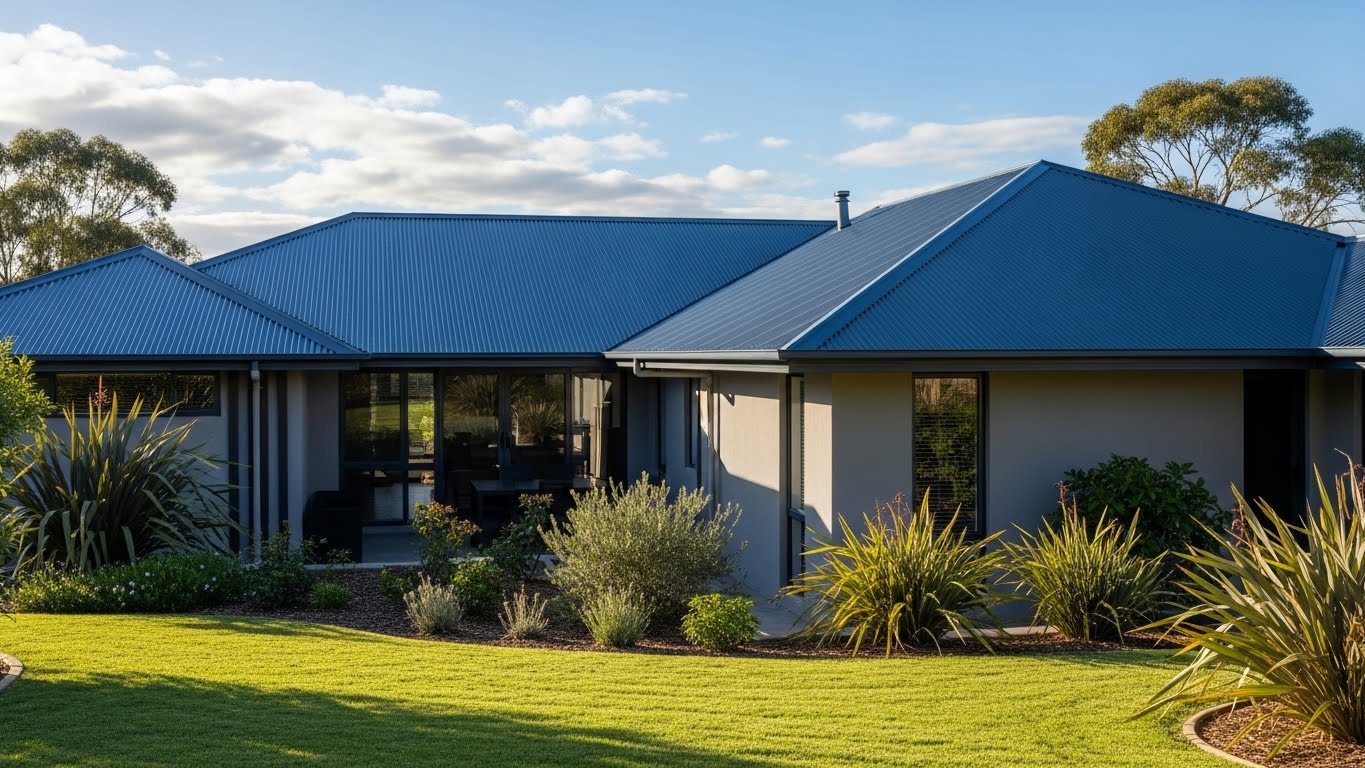
A Smart Choice in Bushfire-Prone Areas
For many Australians living in regional or bushy areas, fire safety is a critical concern. Metal roofing is non-combustible. Colorbond roofing is compliant for use in bushfire-prone areas, including those with the highest Bushfire Attack Level (BAL-FZ) rating, when installed correctly according to specifications. This makes it one of the safest roofing choices you can make.
Resists Corrosion in Coastal Areas
If you live near the coast, the salty air can be brutal on building materials, accelerating rust and corrosion. Colorbond steel is specifically designed to handle these marine environments, offering superior corrosion resistance compared to standard galvanised steel. This makes it a long-lasting and low-maintenance choice for coastal homes.
The Great Australian Debate: Colorbond vs. Tiles
For many homeowners, the decision comes down to a direct comparison with traditional roof tiles. Here’s how they stack up.
- Weight: Colorbond roofing is significantly lighter than concrete or terracotta tiles. This places much less structural load on your home’s frame. For older homes, this can be a major advantage, as it may not require additional structural reinforcement.
- Durability: Tiles can crack from impact or foot traffic (like a tradesperson walking on the roof). A cracked tile is a direct entry point for water. Colorbond roofing will not crack and is designed to be walked on when necessary.
- Maintenance: Tiled roofs often require maintenance over time, particularly the mortar (pointing) in the ridge capping, which can crack and fall out, leading to leaks. A professionally installed Colorbond roof is virtually maintenance-free.
- Rain Noise: This is the biggest myth. Many people think a metal roof will be deafening in the rain. A modern Colorbond roof installed with the correct insulation (called sarking) underneath dampens the sound, turning a downpour into a gentle patter, often no louder than a tiled roof.
What’s Involved in a Professional Installation?
The long-term performance of your Colorbond roofing depends entirely on the quality of the installation. This is not a simple DIY job. A professional installation is a meticulous process.
- Inspection and Preparation: The process starts with a full inspection of your current roof structure.
- Removal of Old Roof: If it’s a roof replacement, the old tiles or metal sheets are removed and the timber battens underneath are inspected. Any rotten or damaged battens must be replaced.
- Insulation (Sarking): A layer of reflective foil insulation, known as sarking, is laid over the battens. This is a critical step that acts as a moisture barrier, a dust barrier, and provides significant thermal and acoustic insulation.
- Installation of Sheets: The new Colorbond roofing sheets are laid, ensuring a perfect overlap, and securely fastened with the correct type of screws to prevent leaks and ensure they can withstand high winds.
- Flashing and Finishing: New flashing is installed around all penetrations like chimneys, vents, and skylights, and along the ridges and valleys of the roof. This is a highly skilled job that creates a completely watertight seal.
Questions and Answers: Common Questions About colorbond roofing in Australia
Q: How much does new Colorbond roofing cost?
Ans: The cost of a Colorbond roofing project varies greatly depending on several factors: the size and complexity of your roof, ease of access, and whether it’s a new build or a replacement (which involves the cost of removing the old roof). The only way to get an accurate price is to get a detailed, written quote from a licensed roofing professional after an on-site inspection.
Q: Is Colorbond roofing really noisy when it rains?
Ans: This is a persistent myth based on old, uninsulated “tin” sheds. A modern, professionally installed Colorbond roof with quality insulation (sarking) underneath is not loud in the rain. The insulation effectively dampens the sound, making it comparable to a tiled roof.
Q: Can I install Colorbond roofing over my old tile roof?
Ans: While this is sometimes promoted as a “quick” solution, reputable roofing professionals will almost always advise against it. Laying metal over tiles adds unnecessary weight and, most importantly, makes it impossible to properly inspect and repair the timber battens underneath. It can also trap moisture and lead to hidden rot. The correct method is to remove the old roof completely.
Q: Do I need council approval to install Colorbond roofing in Australia?
Ans: It depends. In many cases, replacing an old roof with a new one of the same material and colour does not require council approval. However, if you are changing the material (e.g., from tiles to Colorbond) or significantly changing the colour, especially on a home with a heritage overlay, you may need approval. It is always a wise precaution to check with your local council before starting any work.
Conclusion: Your Path to a Successful colorbond roofing in Australia
Colorbond roofing has earned its place as an Australian favourite for good reason. It’s a tough, energy-efficient, low-maintenance, and stylish solution that has been tested and proven to perform in our unique and challenging climate. From the hot sun to coastal salt spray and the risk of bushfires, it offers a level of performance that is hard to match.
