
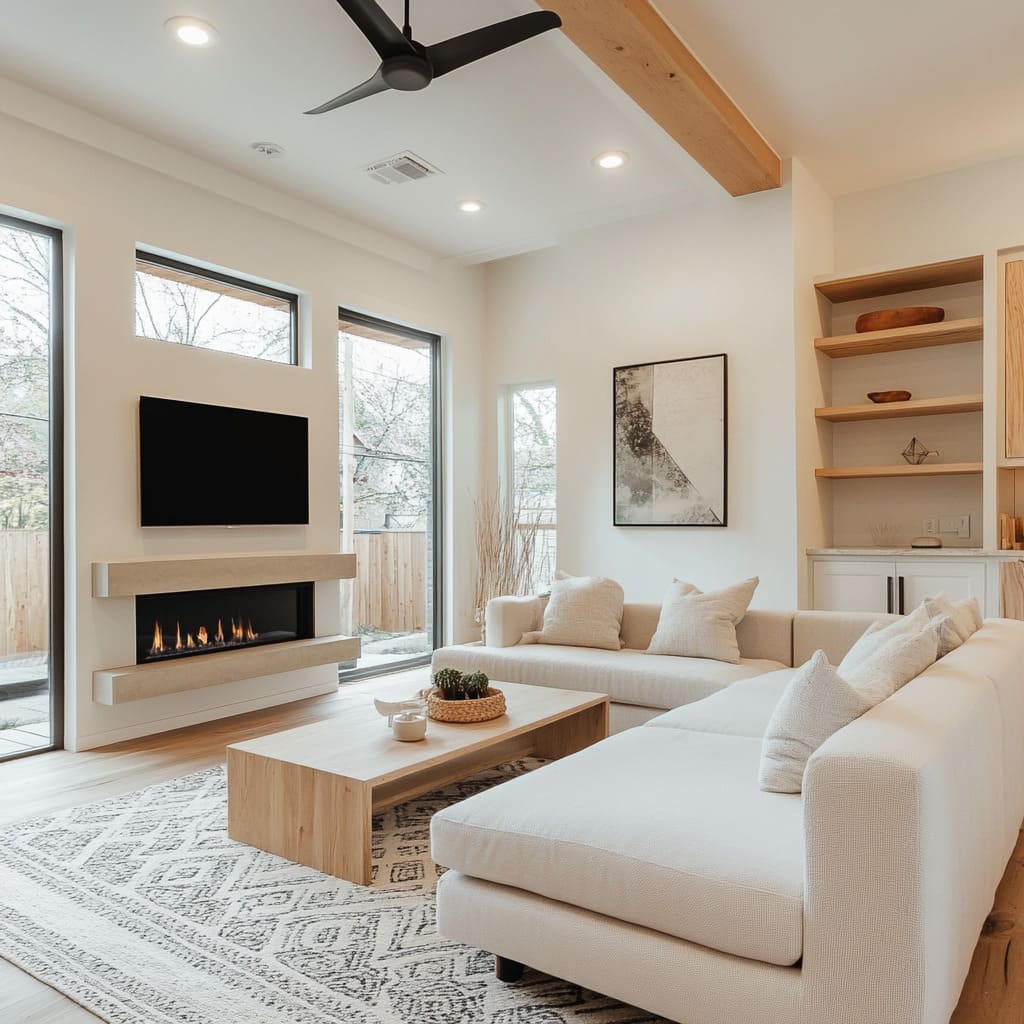
The living room is often the most active part of a home. Family members gather there, guests are welcomed and quiet evenings can easily turn into long conversations. That makes it an important space when Vastu principles are being considered. Direction, furniture placement, light and openness can all influence how the room feels.
Vastu does not require a living room to look traditional. Its principles can be worked into a contemporary interior through sensible planning. Even choices elsewhere in the home, such as the kitchen platform stone colour as per vastu or bathroom position as per vastu, can be considered as part of a larger Vastu plan.
Table of Contents
1. Choose a Suitable Direction
Vastu traditionally considers the north, east, northeast and northwest suitable directions for a living room. These areas are associated with openness and movement, making them suitable for a space where people regularly gather. Where the floor plan allows, positioning the living room in one of these zones can be a useful starting point.
The existing structure still matters. Windows, doors, ventilation and adjoining rooms all need to be considered before finalising the layout. A Vastu preference should not be followed so rigidly that it makes the room awkward to use.
2. Keep Heavy Furniture in the Right Zone
Large sofas, storage units and display cabinets can make a living room feel crowded when they are spread across every wall. Vastu generally recommends placing heavier furniture towards the south or west, leaving the north and east portions relatively lighter and more open.
A practical arrangement can include:
- Placing the main sofa against a south or west wall
- Keeping the centre of the room relatively open
- Leaving clear paths around seating
- Avoiding furniture that blocks windows or doorways
This arrangement has a practical advantage too. A clearer centre gives family members more room to move and makes it easier to accommodate guests. The seating can remain generous without making the room feel packed.
3. Keep the Entrance Clear and Well Lit
The entrance has an immediate effect on how a living room feels. Vastu often gives importance to north, east and northeast-facing entrances, but whichever direction the doorway faces, the area should remain clear. Shoe storage, decorative pieces and bulky furniture should not make the first few steps into the room difficult.
Lighting is equally useful. A study published in Sleep Medicine Reviews found that light exposure at home around dusk and dawn can influence sleep and wellbeing, although the researchers noted that more research is needed. This makes good natural and artificial lighting a sensible consideration for a living room, whether or not Vastu is being followed.
4. Bring Natural Elements Into the Room
Plants, wood and natural fabrics can soften a living room and make it feel more connected to nature. Vastu commonly recommends greenery in particular areas, but the plants should also suit the actual conditions of the room. A plant that needs strong daylight will struggle in a dark corner, regardless of where Vastu suggests placing it.
This is also where the wider design approach matters. Bonito Designs plans complete home interiors around how different spaces connect, from the living room and dining area to storage, lighting and furniture. For a Vastu-conscious home, this allows traditional preferences to sit alongside practical decisions about movement, family routines and the visual relationship between rooms, rather than making individual Vastu elements feel disconnected.
5. Reduce Clutter and Keep the Layout Open
A living room needs enough storage to handle everyday items, but filling every available surface can work against the sense of openness that Vastu encourages. Remotes, toys, books and daily-use objects should have designated places so that the room can be reset easily after use.
The layout should also account for real household routines. A family that regularly entertains guests may need flexible seating, while a smaller home may benefit from furniture that serves more than one purpose. Keeping frequently used items within reach while maintaining clear walking routes makes the room easier to live in.
Vastu-Friendly Living Rooms for Indian Cities
Homes in Indian cities such as Mumbai, Delhi, Hyderabad and Chennai can have very different layouts, but Vastu principles can be adapted to each one. Bengaluru homes, for instance, may range from compact apartments to larger family residences, so an interior design company in Bangalore can work with the home’s orientation, available daylight and everyday requirements instead of applying the same formula everywhere.
In areas such as HRBR Layout, the same approach can be adapted to the home’s specific structure. Interior designers in HRBR Layout can incorporate Vastu preferences while planning seating, storage, lighting and circulation around the existing floor plan. This keeps the room practical and contemporary while allowing Vastu to remain part of the overall design.
Conclusion
Living room Vastu can be incorporated without compromising modern design. Direction, furniture placement, lighting, natural elements and an uncluttered layout can all contribute to a room that feels comfortable and welcoming. When these choices are adapted to the home’s structure and the family’s daily habits, Vastu becomes a practical design consideration rather than a set of rigid rules.
