
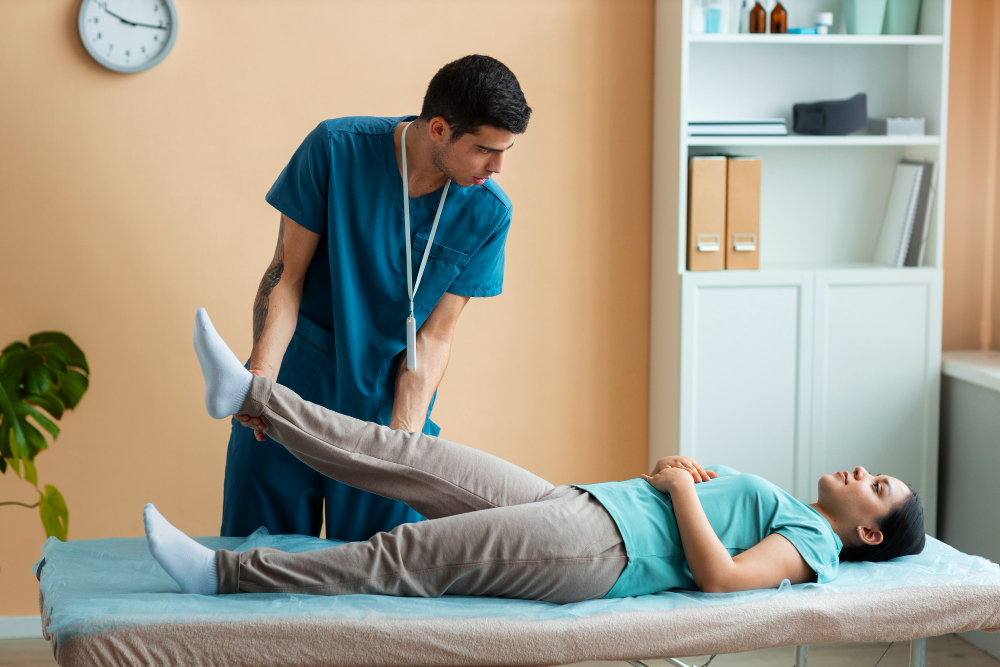
If you are searching for physical therapy Edison NJ, you may be wondering whether physical therapy is appropriate for your specific pain, injury, surgery, or mobility problem. Physical therapy can address many musculoskeletal and movement-related conditions by improving strength, mobility, balance, coordination, and the ability to perform everyday activities.
Physical therapy is healthcare focused on evaluating movement and functional limitations and using individualized rehabilitation strategies to improve mobility, strength, physical function, and participation in daily activities.
At Beyond Radix Physical Therapy, the Edison clinic provides individualized rehabilitation for orthopedic injuries, chronic pain, sports injuries, post-surgical recovery, arthritis, neurological conditions, balance problems, and age-related mobility concerns. The Edison location is at 209 Pierson Avenue, Edison, NJ 08837.
Physical rehabilitation addresses conditions that affect millions of people. For example, the World Health Organization reports that 619 million people experienced low back pain worldwide in 2020, making it the world’s leading cause of disability.
Table of Contents
What Can Physical Therapy in Edison, NJ Help With?
Physical therapy in Edison, NJ can help with a wide range of conditions that affect pain, strength, joint mobility, walking, balance, coordination, and everyday function. The appropriate treatment depends on the diagnosis and examination, which is why a personalized evaluation is more useful than simply choosing exercises based on where the body hurts.
Beyond Radix Physical Therapy currently provides services including:
| Condition or Need | Physical Therapy Focus | Beyond Radix Service |
|---|---|---|
| Back pain | Mobility, posture, core strength | Back Pain Treatment |
| Neck pain | Mobility, posture, strength | Neck Pain Treatment |
| ACL or MCL injuries | Knee strength and stability | ACL & MCL Rehabilitation |
| Ankle sprains | Balance, strength, re-injury prevention | Ankle Sprain Rehabilitation |
| Shoulder problems | Rotator cuff strength and mobility | Rotator Cuff Rehabilitation |
| Arthritis | Joint mobility and functional exercise | Arthritis Management |
| Muscle and joint pain | Movement, strength, flexibility | Muscle & Joint Pain Relief |
| Neurological conditions | Balance, gait and coordination | Neurological Rehabilitation |
| Aging-related changes | Strength, balance and mobility | Aging & Geriatric Therapy |
| Foot alignment problems | Alignment and movement support | Custom Orthotics |
| Accident injuries | Mobility and functional recovery | Accident Rehabilitation |
These services are listed on the Beyond Radix Physical Therapy service page.
Physical therapy is particularly relevant for musculoskeletal conditions because these problems are common. CDC data from the National Health Interview Survey found that 53.2 million U.S. adults, or 21.2%, reported diagnosed arthritis during 2019–2021.
The goal is usually not simply to reduce symptoms temporarily. Rehabilitation aims to improve the physical abilities needed to return to work, exercise, household activities, sports, and independent living.
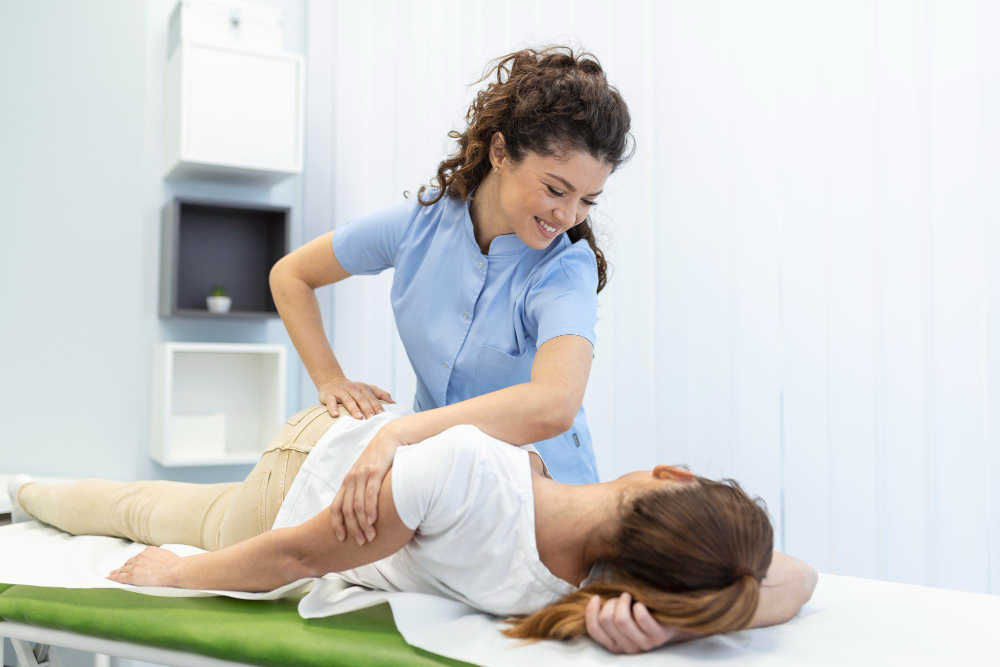
Can Physical Therapy Help With Back, Neck, and Chronic Pain?
Physical therapy can help many patients with back, neck, and persistent musculoskeletal pain by addressing movement limitations, weakness, reduced activity tolerance, posture-related problems, and other factors identified during an examination. Treatment often combines exercise, mobility work, strengthening, education, and gradual return to activities rather than relying only on passive pain-relief techniques.
Low back pain is one of the strongest examples. WHO estimates that 619 million people had low back pain in 2020 and projects that the number could reach 843 million by 2050. Approximately 90% of low back pain is classified as non-specific, meaning it cannot be confidently attributed to one specific structural disease or tissue problem.
Beyond Radix Physical Therapy’s back pain program evaluates:
- Posture
- Spinal movement
- Muscle strength
- Pain patterns
- Functional limitations
Treatment then progresses through pain management, mobility restoration, strengthening, and posture or movement training.
Physical therapy can also be useful when back pain includes sciatica. In a randomized controlled trial of patients with recent-onset sciatica, 45.2% of patients receiving early physical therapy reported treatment success at one year compared with 27.6% receiving usual care.
Neck stiffness, whiplash, muscle and joint pain, and persistent pain may require different approaches, but the principle remains the same: identify what is limiting movement and build rehabilitation around that finding.
Can Physical Therapy Help With Sports Injuries and Joint Problems?
Yes. Physical therapy can help athletes and active adults recover from ankle sprains, knee ligament injuries, shoulder problems, muscle strains, tendon-related conditions, and other orthopedic injuries. Rehabilitation usually progresses from restoring basic motion and strength toward balance, coordination, endurance, and sport-specific activity as the injured area becomes ready for greater demands.
Beyond Radix Physical Therapy offers dedicated programs for ACL and MCL injuries, ankle sprains, and rotator cuff rehabilitation, along with broader orthopedic and sports injury care.
Exercise-based ankle rehabilitation has measurable evidence behind it. A systematic review of 14 randomized controlled trials involving 2,182 participants found that exercise-based rehabilitation reduced ankle-sprain reinjury prevalence at 12 months compared with usual care, with an odds ratio of 0.60.
Shoulder rehabilitation also has a large research base. A 2026 systematic review and network meta-analysis of 89 randomized trials involving 5,532 people with rotator cuff tendinopathy found that shoulder-focused exercise may improve pain and function compared with no treatment, although the researchers cautioned that certainty for several comparisons remained low.
For sports injuries, the objective is not merely to become pain-free. Rehabilitation should prepare the body for the actual demands of running, lifting, jumping, throwing, changing direction, or returning to competition.
Can Physical Therapy Help Arthritis, Balance, and Age-Related Mobility Problems?
Physical therapy can help people with arthritis, balance problems, walking difficulty, weakness, or declining mobility by using progressive strengthening, joint mobility work, balance exercises, gait training, and functional movement practice. Treatment can be especially valuable when pain or fear of falling begins limiting normal activities and reducing independence.
Arthritis is a major reason adults experience joint-related limitations. CDC data show that 53.2 million U.S. adults had diagnosed arthritis during 2019–2021, including 47.3% of adults age 65 and older in the analyzed population.
A randomized clinical trial of 156 people with knee osteoarthritis compared physical therapy with glucocorticoid injections. At one year, patients receiving physical therapy had a mean WOMAC score of 37.0 compared with 55.8 in the injection group, indicating less pain, stiffness, and functional disability in the physical therapy group.
Beyond Radix Physical Therapy provides:
Fall prevention is another important reason to seek care. CDC data updated in 2026 show that more than 14 million Americans age 65 and older—approximately 1 in 4—report falling each year. About 37% of older adults who fall sustain an injury requiring medical treatment or restricting activity for at least one day.
Physical therapy can target modifiable factors such as poor leg strength, balance, walking ability, and movement confidence.
Can Physical Therapy Help After Surgery or an Accident?
Physical therapy can support recovery after orthopedic surgery or an accident by progressively restoring mobility, strength, balance, and functional ability while respecting medical precautions and tissue healing. Treatment may begin with basic movement and symptom management before progressing toward walking, stairs, lifting, work activities, exercise, or sports.
Beyond Radix Physical Therapy states that its individualized care includes post-surgical rehabilitation, while its accident rehabilitation program covers conditions such as whiplash, fractures, sprains, and muscle strains.
Rehabilitation after surgery may include:
- Managing swelling and movement limitations.
- Restoring appropriate joint range of motion.
- Rebuilding muscle activation and strength.
- Improving balance and movement control.
- Retraining walking or everyday activities.
- Preparing for work, recreation, or sports.
The type of rehabilitation depends heavily on the procedure. ACL reconstruction, rotator cuff surgery, knee replacement, and fracture recovery all have different healing requirements.
This is why individualized progression matters. After total knee replacement, for example, research has documented a 62% reduction in quadriceps strength approximately one month after surgery, demonstrating how dramatically surgery and early postoperative recovery can temporarily affect muscle performance.
For accident-related neck symptoms, Beyond Radix also offers dedicated whiplash rehabilitation that focuses on neck mobility, strength, posture, and safe return to normal activity.
What Happens at Your First Physical Therapy Appointment in Edison, NJ?
Your first physical therapy appointment usually focuses on understanding what is causing difficulty rather than immediately giving everyone the same exercises. The therapist reviews your symptoms, medical and injury history, activities, and goals, then examines movement, mobility, strength, balance, or other relevant functions before creating an individualized plan.
Depending on your condition, an evaluation may include:
- Range-of-motion testing
- Muscle strength testing
- Walking or gait assessment
- Balance testing
- Posture and movement assessment
- Joint or functional movement testing
- Review of activities that worsen symptoms
- Discussion of work, exercise, or sports demands
After the evaluation, your therapist can explain what problems appear modifiable and how rehabilitation may progress.
At Beyond Radix Physical Therapy, the website emphasizes personalized, one-on-one care and individualized treatment planning rather than using the same approach for every patient. The clinic also states that walk-ins are welcome.
The Edison location is:
Beyond Radix Physical Therapy
209 Pierson Avenue, Edison, NJ 08837
The clinic currently lists hours of 8:00 AM–8:00 PM Monday through Friday and 9:00 AM–4:00 PM Saturday, making early, evening, and weekend appointments available.
For general health, CDC guidance recommends adults work toward at least 150 minutes of moderate-intensity physical activity each week plus muscle-strengthening activity on at least 2 days, although a rehabilitation program may begin well below these levels depending on pain, injury, surgery, or functional ability.
Do You Need a Doctor’s Referral for Physical Therapy in Edison, NJ?
Patients in New Jersey have direct access to physical therapy, meaning a physician referral is not always required before an evaluation or treatment begins. However, state provisions, your specific health condition, and individual insurance-plan requirements can affect how care is accessed or covered, so patients should verify benefits when insurance reimbursement is important.
Direct access is the ability to seek physical therapy services without first obtaining a traditional physician referral, subject to applicable state rules and payer requirements.
Beyond Radix Physical Therapy specifically states that New Jersey Direct Access allows patients to begin physical therapy without requiring a prescription or referral from a physician.
The American Physical Therapy Association categorizes New Jersey as a state with direct access “with provisions,” rather than completely unrestricted access. APTA also reports that all 50 states, Washington, D.C., and the U.S. Virgin Islands have some form of patient access to physical therapist services, although requirements differ by jurisdiction.
This can be particularly useful when someone develops:
- Back or neck pain
- A sports-related strain or sprain
- Gradually worsening joint stiffness
- Difficulty walking
- Balance problems
- Reduced mobility
Direct access does not mean every condition should automatically be treated with physical therapy. A therapist may recommend medical evaluation or coordinate with another healthcare professional when symptoms suggest that additional testing or treatment is appropriate.
When Should You See a Physical Therapist in Edison, NJ?
Consider seeing a physical therapist when pain, weakness, stiffness, balance problems, or reduced mobility begins interfering with work, exercise, sports, sleep, walking, or everyday activities. You do not necessarily need to wait until symptoms become severe; early evaluation can help determine whether rehabilitation is appropriate and what activities can be safely continued.
Common reasons to schedule an evaluation include:
- Back or neck pain that keeps returning
- Knee, hip, shoulder, or ankle pain
- Difficulty walking or climbing stairs
- A sports injury
- Recovery after surgery
- Weakness after inactivity
- Arthritis-related stiffness
- Repeated ankle sprains
- Balance problems or recent falls
- Reduced movement after an accident
- Difficulty returning to normal exercise
Physical therapy should not replace urgent medical care when serious warning signs are present. Seek prompt medical attention for major trauma, obvious deformity, inability to bear weight after an injury, chest pain, loss of consciousness, rapidly progressing weakness, severe unexplained neurological symptoms, or new bowel or bladder dysfunction with significant back or leg symptoms.
For most non-emergency musculoskeletal problems, maintaining appropriate activity is often preferable to prolonged inactivity. CDC guidance specifically notes that some physical activity is better than none, and appropriately active adults should work toward at least 150 minutes per week of moderate-intensity activity when their health permits.
Beyond Radix Physical Therapy’s Edison clinic provides individualized evaluation for patients seeking pain relief, rehabilitation, improved mobility, or a safe return to normal activity.
Frequently Asked Questions About Physical Therapy in Edison, NJ
Physical therapy in Edison, NJ can address many orthopedic, neurological, age-related, post-surgical, and movement-related concerns. The appropriate treatment depends on the cause of your symptoms, so an evaluation is usually more useful than choosing exercises solely from an online list based on whether your back, knee, neck, or shoulder hurts.
What conditions can a physical therapist in Edison, NJ treat?
Physical therapists can help with conditions involving pain, weakness, reduced mobility, balance, and functional movement. Beyond Radix Physical Therapy offers services for back and neck pain, arthritis, ACL/MCL injuries, ankle sprains, rotator cuff problems, neurological rehabilitation, geriatric therapy, and more.
Can physical therapy in Edison help with back pain?
Yes. Physical therapy can address movement, strength, posture, and functional limitations associated with many types of back pain. WHO reports that approximately 90% of low back pain cases are non-specific, making individualized rehabilitation an important part of management.
Do I need a referral for physical therapy in Edison, NJ?
Not always. New Jersey permits direct access to physical therapy with certain provisions, and Beyond Radix Physical Therapy states that patients may begin care without a physician prescription or referral. Insurance requirements can still vary.
Can physical therapy help sports injuries?
Yes. Rehabilitation can restore mobility, strength, balance, and sport-specific function after appropriate injuries. A meta-analysis of 2,182 ankle-sprain patients found exercise-based rehabilitation reduced reinjury prevalence at 12 months compared with usual care.
Does Beyond Radix Physical Therapy treat older adults?
Yes. Its Aging & Geriatric Therapy program focuses on strength, balance, mobility, functional movement, and maintaining independence. Its Neurological Rehabilitation program also addresses walking, balance, and coordination problems.
Can I get physical therapy after surgery?
Yes. Post-surgical rehabilitation can help restore mobility, strength, balance, and normal function according to the surgical procedure and healing stage. Beyond Radix Physical Therapy lists post-surgical rehabilitation among its treatment areas.
Beyond Radix Physical Therapy
209 Pierson Ave, Edison, NJ 08837, USA
+1 (201) 210-2315
