
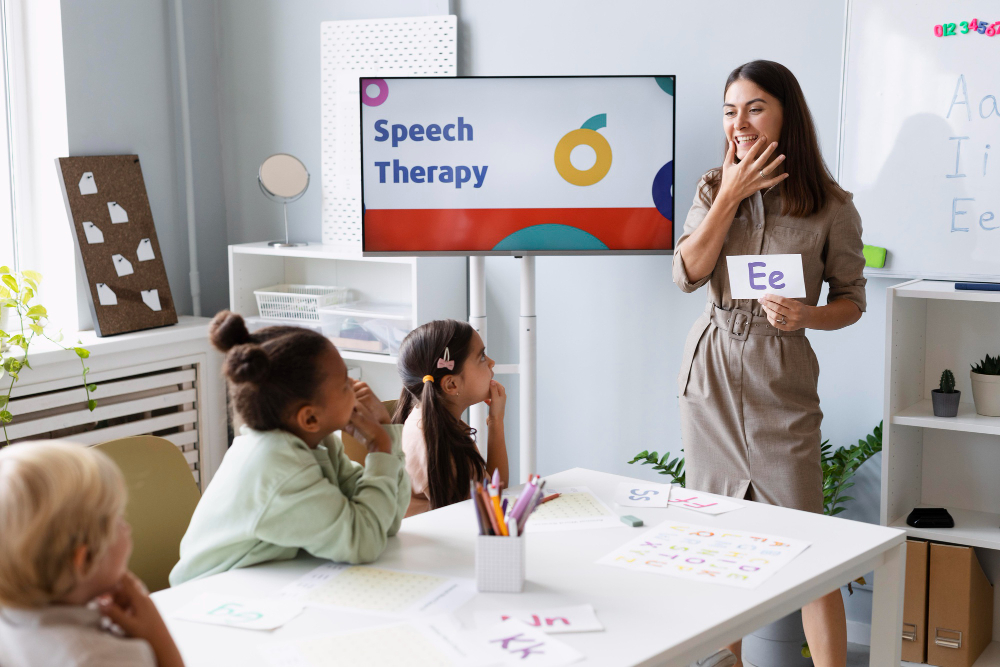
Speech therapy is a specialised healthcare service designed to help individuals improve their communication skills, speech clarity, and language development. It plays a crucial role in enhancing both verbal and non-verbal communication, enabling people to express themselves clearly and confidently in everyday life.
From children with speech delays to adults recovering from medical conditions, speech therapy offers tailored solutions that address a wide range of communication challenges.
Table of Contents
What Is Speech Therapy?
Speech therapy is a treatment approach that focuses on diagnosing and improving speech, language, voice, and communication disorders. It is conducted by trained professionals known as speech-language pathologists (SLPs).
The therapy aims to help individuals:
- Pronounce words correctly
- Improve fluency and reduce stuttering
- Develop language comprehension and expression
- Strengthen oral muscles for better speech
Speech therapy is not limited to speaking—it also includes listening, understanding, reading, and even social communication skills.
Who Needs Speech Therapy?
Speech therapy benefits people of all ages, depending on their specific needs and conditions.
1. Children
Children often require speech therapy for developmental reasons. Common issues include:
- Delayed speech or language development
- Difficulty pronouncing certain sounds
- Stuttering or stammering
- Trouble understanding or following instructions
Early intervention is key, as it helps children build strong communication skills during critical developmental years.
2. Adults
Adults may need speech therapy due to medical conditions or injuries such as:
- Stroke or brain injury
- Voice disorders
- Neurological conditions like Parkinson’s disease
- Difficulty swallowing (dysphagia)
Speech therapy helps restore communication abilities and improve quality of life.
Common Speech and Language Disorders
Speech therapy addresses a variety of communication challenges, including:
Articulation Disorders
Difficulty producing certain sounds correctly, making speech unclear.
Fluency Disorders
Includes stuttering, where speech may be interrupted by repetitions or pauses.
Language Disorders
Difficulty understanding or using words and sentences properly.
Voice Disorders
Problems with pitch, volume, or quality of voice.
Apraxia of Speech
A motor speech disorder where the brain struggles to coordinate speech movements.
How Speech Therapy Works
Speech therapy sessions are structured, interactive, and tailored to individual needs.
Initial Assessment
The therapist evaluates speech, language, and communication abilities to identify specific issues.
Personalised Treatment Plan
A customised plan is created based on the individual’s goals and challenges.
Therapy Sessions
Sessions may include:
- Pronunciation and articulation exercises
- Breathing and voice control techniques
- Language-building activities
- Interactive games for children
Home Practice
Therapists often provide exercises to practice at home, ensuring faster progress.
Benefits of Speech Therapy
Speech therapy offers numerous benefits that go beyond improving speech:
- Clear Communication
Helps individuals express thoughts and ideas effectively. - Improved Confidence
Better communication leads to increased self-esteem. - Enhanced Social Skills
Enables smoother interaction with others in personal and professional settings. - Academic and Career Growth
Strong communication skills are essential for success in school and the workplace. - Better Quality of Life
Reduces frustration caused by communication difficulties.
Speech Therapy for Children
Speech therapy is especially important for children, as communication skills are essential for learning and social development.
Key Focus Areas:
- Vocabulary building
- Sentence formation
- Listening and comprehension
- Social communication skills
Therapists use fun and engaging methods like storytelling, games, and visual aids to keep children motivated and involved.
Signs Your Child May Need Speech Therapy:
- Limited vocabulary for their age
- Difficulty forming sentences
- Trouble understanding instructions
- Unclear or hard-to-understand speech
- Lack of interest in communication
If these signs are noticed, early consultation with a speech therapist is recommended.
Speech Therapy for Adults
For adults, speech therapy often focuses on recovery and rehabilitation.
Common Goals:
- Regaining speech after stroke or injury
- Improving voice clarity and strength
- Managing stuttering or fluency issues
- Enhancing communication in professional settings
Therapy sessions are designed to rebuild skills gradually and effectively.
Techniques Used in Speech Therapy
Speech therapists use a variety of techniques depending on the condition:
- Articulation Therapy
Repeating sounds and words to improve pronunciation. - Language Intervention Activities
Exercises to enhance vocabulary and sentence structure. - Oral Motor Therapy
Strengthening muscles used for speech. - Fluency Techniques
Strategies to manage stuttering and improve speech flow. - Augmentative and Alternative Communication (AAC)
Tools like picture boards or communication devices for non-verbal individuals.
Tips to Support Speech Development at Home
Parents and caregivers can play an important role in supporting speech therapy:
- Talk and interact regularly with your child
- Read books together and encourage storytelling
- Be patient and give time for responses
- Avoid correcting harshly—encourage gently
- Limit screen time and promote real conversations
Consistency at home can significantly improve therapy outcomes.
Choosing the Right Speech Therapist
Selecting the right professional is essential for effective results. Consider the following:
- Certified and experienced speech-language pathologist
- Experience with specific speech or language issues
- Friendly and supportive approach
- Use of modern tools and techniques
A good therapist creates a comfortable environment that encourages learning and progress.
Final Thoughts
Speech therapy is a powerful tool that helps individuals overcome communication barriers and lead more confident, fulfilling lives. Whether it’s a child learning to speak clearly or an adult regaining lost communication skills, speech therapy provides the guidance and support needed for success.
By addressing speech and language challenges early and consistently, individuals can improve not just how they speak, but how they connect with the world around them. If you or someone you know is facing communication difficulties, seeking professional speech therapy can be a life-changing step toward better communication and greater confidence.
