
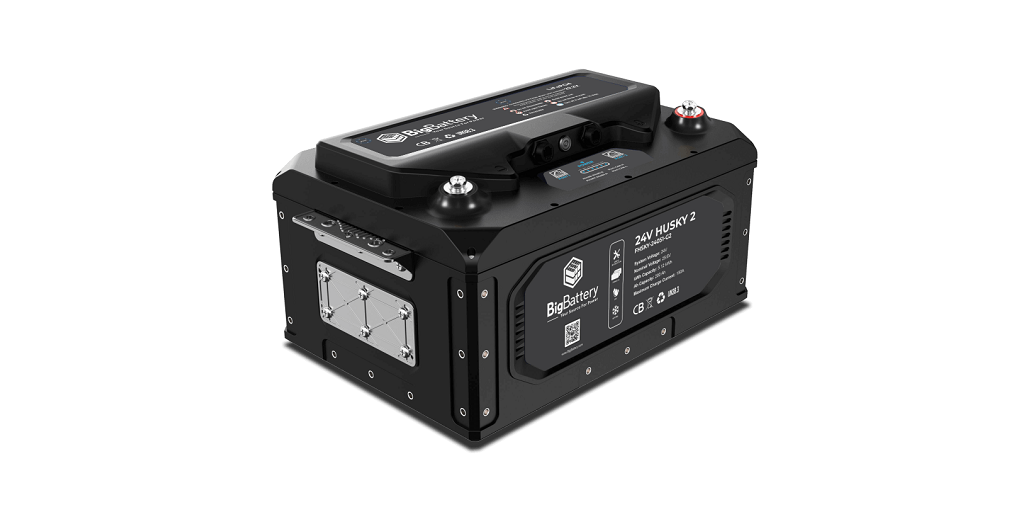
Congrats on your new purchase of an LFP battery for your trolling motor. They are light, compact, easy to care for, and offer consistent power output through the life of the charge. In addition to this, they offer many other significant benefits over lead-acid trolling marine batteries.
Nonetheless, both that new LFP battery and the trolling motor itself should be cared for properly to ensure your investment is protected and that they both enjoy long service lifespans. Here’s what to know.
Table of Contents
Keep the Battery Charged
Leaving an LFP battery dead (or even at a low state of charge) for any appreciable amount of time will significantly impact its overall charge potential.
Therefore, make sure you keep the battery on a trickle charger or maintainer when you are not using it, and after a long day on the water, make sure to top it off.
Protect the Motor Leads
At the end of the trolling motor leads you will likely either have ring terminals or else alligator clips. Where the terminal is connected to the bare pigtail of the wire lead, you will either want to protect it with shrink wrap or else add dielectric grease after the connections are established.
Whenever the leads are disconnected from the terminals, keep them out of the water as well.
Keep the Terminal Connections Tight
Whatever sorts of terminal connections you use, make sure the connections are tight once established. This will help ensure proper power transmission and will ensure both efficiency as well as full power output potential through the trolling motor itself.
If Reasonably Possible, Disconnect the Leads When the Motor Is Not in Use
One of the great things about LFP batteries (and all rechargeable lithium batteries) is that they deliver a very long self-discharge potential, usually as long as between 1% to 3% per month.
However, due to a phenomenon called parasitic draw, batteries will discharge more quickly when they are hooked up to a device, even if the device is not in use, or is switched “off”.
Therefore, if it is at all possible, disconnect the LFP battery’s leads from the trolling motor whenever you’re in port, or just whenever you’re not actively running the motor.
Cover Them When Outdoors
If you leave your trolling motor and its LFP battery on the boat and exposed during the season, get a cover for both.
UV light, rain, wind and other weather can damage both, and a little bit of moisture getting into the motor’s internal circuits can quickly damage it, hindering its performance or incapacitating it.
Naturally, being trolling motors, most are sealed, but leaving them in the elements is still a surefire way to shorten their service lifespan.
Therefore, cover both the motor and the battery when in port.
Bring the Trolling Motor Indoors at the End of the Season
If your boat is docked for any appreciable period of time, or at the end of the season, take the trolling motor off its mounts and bring it inside, or at least in a shed or garage, for the same reasons already mentioned.
Bringing the trolling motor indoors to shield it from the sun and weather will help protect it and ensure that it lasts longer.
Need a New LFP Battery for Your Trolling Motor?
Thinking about transitioning away from lead-acid batteries, or simply need a new LFP battery for a trolling motor or some other marine application? Start your search online at BigBattery. They carry a wide variety of options and can even help you pick one that’s best for your needs.
For More Information About 48v Lifepo4 Battery and Lithium Battery Pack Please Visit: Bigbattery.
