
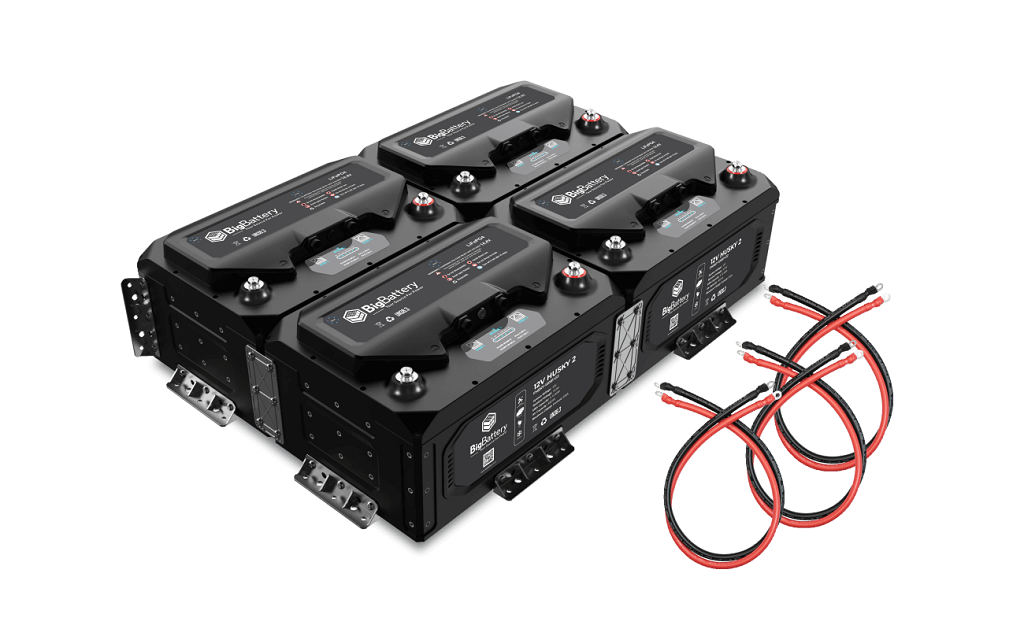
Whether your trolling motor or your golf cart is powered by a rechargeable lithium battery (or you use lithium batteries for some other application) there are a few universal tactics you can apply to ensure that these batteries last longer and enjoy prolonged lifespans.
Though battery chemistry differs, proper lithium battery care is largely universal. Here are some top insights.
Table of Contents
Maintaining Charge Level
This is one of the most important pointers for prolonging rechargeable lithium batteries lifespans.
The battery, when it is not in use, should have a charge level between 80% and 100%. You don’t necessarily need to get the battery to read completely full, but keeping it above 80% will not only prolong the life of the battery itself but help ensure that it enjoys a greater depth of discharge when in use.
Don’t Leave Them Hooked Up to the Charger
While you should keep rechargeable lithium batteries more or less topped off, you shouldn’t leave them hooked up to the charger.
Most modern chargers and batteries are governed by a battery management system, or BMS, that monitors battery health, temperature, and individual cell charge level, but even so, the self-discharge of lithium batteries is very low. As a result, there is no need to leave them hooked up to the charger once topped off, and in fact, it is safer to disconnect them.
Use Consistently
Maintaining depth of discharge is also tied to consistent battery use. You don’t need to drain the battery fully during a cycle, but a partial discharge followed by a solid charge back to near-full health will help prolong the battery’s life as well as its performance under a load.
Leaving a battery stored but unused, even near a full charge, is not ideal. It’s better to give it some use.
Protection Against Elevated (and Low) Temperatures
One of the worst things you can do is keep a lithium battery nearly fully charged and in a very hot location, as this will damage the battery’s cells and significantly lower its discharge abilities, ability to hold a charge, and its lifespan.
Both high and low temperatures are not good for rechargeable lithium batteries, but in particular maintaining a high charge in high temperatures will counteract battery health.
It’s understandable that sometimes operating conditions will be unfavorable, but if possible, when the battery is not in use, even if it is hooked up, shelter it against extreme temperatures.
Don’t Ever Leave a Battery Dead
Lastly, the best way to kill a rechargeable lithium battery, for good, is to leave it dead for any period of time. Doing so can kill the battery outright such that it will not even take a charge once you hook it back up to the charger.
What Happens to Rechargeable Lithium Batteries That Aren’t Cared for
When batteries are stored exposed to extreme temperatures, overcharged, or left dead, one of several things can happen.
One is that the battery can “die” in the sense that it will not take a charge even when hooked up to a charger.
Another is that depth of discharge will be adversely affected. You will notice this when the battery reads fully charged, but then inexplicably drops its charge level after only light use.
And, of course, not properly caring for lithium batteries will reduce the number of charge cycles they are ultimately able to deliver.
Explore Replacement Rechargeable Lithium Batteries
Hopefully you’ve kept to the advice in this article so far, but if you’re here because you need a new rechargeable lithium battery for a golf cart, RV, boat, or even some other application, visit BigBattery first. They carry a wide range of options in different voltages and configurations for the applications listed here and others.
For More Information About Rv Battery Replacement and 48v Lifepo4 Battery Please Visit: Bigbattery.
