
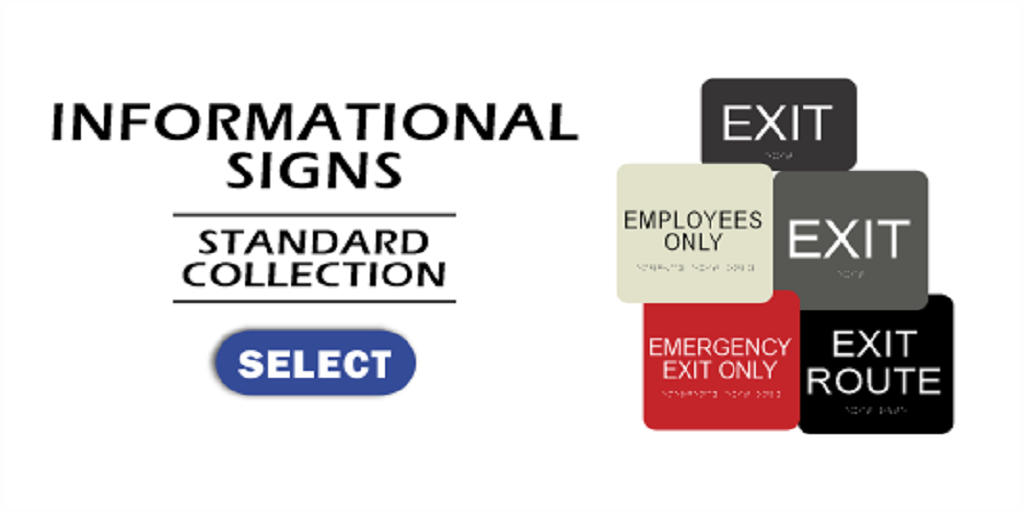
Older buildings struggle to meet modern safety codes, particularly for emergency exit signs. Their outdated infrastructure often conflicts with current standards, especially the requirement for tactile and Braille exit signs, which are crucial for the visually impaired and have been mandated by building codes for decades.
Integrating Modern Safety into Legacy Structures
The most significant barrier in older buildings is the need for retrofitting. When a building undergoes renovation or a change of occupancy, the current code often requires updating exit signage. However, simply bolting a new sign to the wall rarely suffices.
- Modern buildings adhere to clear path-of-travel standards. Older buildings often feature irregular floor plans, inconsistent wall materials (plaster, brick, or non-load-bearing partitions), and historic details that complicate the precise, uniform placement of signs mandated by the Americans with Disabilities Act (ADA) and local fire codes.
- Installing internally illuminated LED exit signs—the gold standard for visibility and energy efficiency—requires routing new electrical conduit. In buildings with protected historical fabric or challenging access points within thick walls or ceiling spaces, this becomes a major, expensive, and sometimes impossible structural undertaking.
- Over a building’s lifespan, signs may have been replaced piecemeal by different facility managers or contractors, leading to a patchwork of non-compliant signs. An older building may have standard pictorial exit signs, but lack the crucial tactile text, Braille translation, and specific mounting height and location (adjacent to the door latch side) required for proper ADA compliance.
- Modern, standardized exit signage (often bright green or red, illuminated) can clash visually with the carefully preserved historic aesthetics of older buildings, particularly those designated as landmarks. Facility managers often struggle to find signage solutions that satisfy strict fire and ADA codes without violating historic preservation guidelines.
- Many older buildings rely on outdated or poorly maintained battery-backup emergency lighting units, which are often separate from the exit signs themselves. This standalone system may not meet the required illumination levels for the exit path, or the batteries may fail to hold a charge for the mandated 90 minutes, leading to non-compliance during testing.
Aging Infrastructure and the Failure to Maintain Compliance
Beyond the initial hurdle of installation, the sheer age of the physical infrastructure contributes to ongoing non-compliance:
- Older, non-LED exit signs rely on fluorescent or incandescent bulbs, which frequently burn out or dim, rendering the sign useless or non-compliant with minimum brightness standards.
- Signs installed decades ago often use mounting methods that don’t withstand the rigors of time or meet modern standards for security and permanence. They may become loose, obscuring the Braille or making the sign dangerously low or high.
- As older buildings are repurposed, temporary partitions or furniture may be added, inadvertently blocking the visibility of an exit sign or creating a path that is no longer clear and accessible, violating the spirit and letter of the law.
- Older buildings often have outdated electrical systems that may struggle to power modern, energy-efficient exit signs, or the original wiring may not meet current code requirements for dedicated emergency power circuits.
- Due to staff turnover or fragmented facility management over the years, older buildings often lack clear, consistent records of maintenance and inspections for exit signs, making it difficult to prove compliance or identify when an upgrade is necessary.
For facility managers overseeing legacy properties, proactively checking for compliance isn’t just about avoiding fines; it’s about ensuring equal access and safety during an emergency. Ensure your building is compliant with modern ADA and fire codes by reviewing the positioning and tactile features of all emergency signage. When planning your next sign replacement or building upgrade, consider a specialized supplier. Find the right ADA and Braille-compliant exit signs for even the most challenging retrofits by checking out Braille Sign Pros.
For More Information About Room Number Signs With Braille and Stairwell Signs Please Visit: Braille Sign Pros LLC.
