
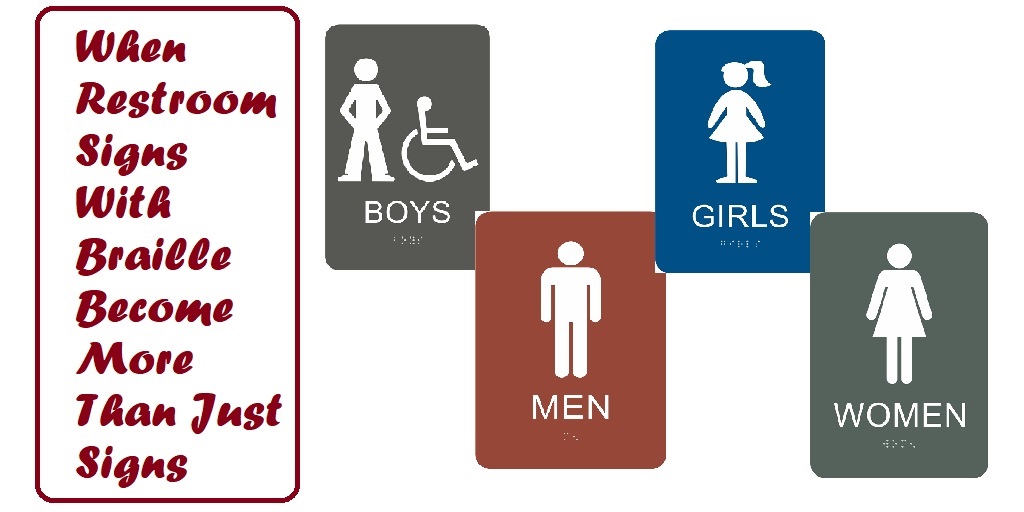
Restroom signs with Braille may look like a small detail on a wall, but for someone living with retinitis pigmentosa, they’re a lifeline. They help turn uncertainty into something a little easier to manage. And people don’t always realize how much that matters until they see how someone with RP moves through the world.
Someone with retinitis pigmentosa can still see. That’s the part many misunderstand. Their vision doesn’t disappear overnight. It narrows. It tightens into a small circle. Everything outside that circle fades. The edges dim first. Darkness creeps inward. And suddenly, what used to be a simple glance becomes a concentrated effort.
They wake up every day and navigate life like that. They memorize routes. They count steps. They scan for movement instead of detail. They rely heavily on what remains of their central vision. And they do all of this while trying to look like they’re handling everything fine. Most of the time, they are. But the work behind it is constant.
Table of Contents
When Life Happens Inside a Tiny Visual Circle
Someone with RP moves through public spaces with a cautious confidence. They step into a mall, a hotel, a café, or a crowded event, and they already know the lighting may work against them. RP makes dim spaces difficult. It makes transitions between dark and bright spaces disorienting. And it makes unexpected corners or fast movement feel overwhelming.
They can’t rely on their edges the way others do. They might miss someone approaching from the side. They might bump into a chair or brush past a person without meaning to. They might stop in the middle of a hallway to reorient, even though the hallway is familiar.
Public life becomes a series of small calculations.
Where am I?
Is someone walking toward me?
Did I pass the door already?
Is this the right hallway?
What did I just miss on my left?
Most people never notice this inner dialogue. Someone with RP looks “fine” from the outside. They learn to mask the strain because they want to participate in life the same way everyone else does. They want to go out, attend events, work, travel, and enjoy their social life. And they do. It just takes more energy.
When They Need Signs They Can Actually Trust
This is where restroom signs with Braille quietly help more than most people realize. Someone with RP might walk right past a printed sign if the letters sit outside their tiny circle of vision. They might not see the icon on the door. They might turn back twice just to be sure they’re not mistaken.
But tactile signage changes the experience.
They can gently run a hand along the wall and find the sign exactly where accessibility guidelines say it should be. They can confirm the room by touch rather than relying on a shrinking field of view.
It sounds small, but it’s not. It’s independence. It’s dignity. It’s one less thing they have to worry about in a world that already asks their eyes to work too hard.
When Better Signage Makes Public Life Less Stressful
Someone with RP doesn’t need a building redesigned for them. They just need predictable help. Clearer routes. Better lighting. And especially, restroom signs with Braille installed where they can find them without guessing.
Small choices like that make public spaces feel safer, calmer, and more welcoming.
And for anyone trying to improve accessibility in their building, Braille Sign Pros offers ADA-compliant signages that make movement easier for people with low vision who deserve that extra bit of consideration.
For more information about Custom Braille Signs and Room Number Signs With Braille Please visit: Braille Sign Pros.
